
The QPath Blog

QuantumPath®, a (highly) effective platform for the professional development of hybrid software systems

In December 2020, I published an article on the great utility of the QuantumPath® platform in the emerging quantum software business [1], based on its capabilities at the time of launch for software lifecycle management and agnostic and hybrid software development. After five years, I think it’s reasonable to summarise the advances made to the platform and update the features of QPath® for developing and integrating hybrid quantum/classical software systems.
When we first started developing quantum software in 2017–18, we realised that, to be useful, quantum software would have to be hybrid to integrate with classical software. Therefore, we set ourselves the challenge of creating professional technologies and tools that would facilitate the professional development of dynamically integrated hybrid software [2], capable of harmoniously integrating classical and quantum solutions, data, systems, etc. All this is achieved while complying with the basic principles of commercial quantum software: extensibility, security and high quality [3].
A few years later, we felt that this challenge was reinforced when both the “Talavera Manifesto for Software Engineering and Quantum Programming” [4] and the “National Agenda for Software Engineering Research and Development” [5] of the Software Engineering Institute at Carnegie Mellon University recognized the relevance of classical and quantum computing coexisting, and declared the importance of developing tools for continuously integrating quantum computers and hybridising quantum software systems with classical IT from a software engineering perspective.
As is well known, classical and quantum software are two very different computing paradigms, each designed to solve specific problems using different approaches. These two paradigms are complementary rather than mutually exclusive, and when combined properly, they will significantly enhance our capacity to process and use information.
Given the immense investment in classical software for general tasks that continues to be efficient and useful for owners and users, it is reasonable to conclude that hybridisation will be a significant part of the new software business. However, to participate successfully in this market, software solutions specially designed to facilitate the novel and complex integration of these two software worlds will be necessary.
Even before the current context emerged, classical computer science had already addressed and resolved various problems posed by traditional, complex software architectures for the dynamic integration of heterogeneous systems. Service Oriented Architecture (SOA) was defined as a software design paradigm that structures applications as autonomous, reusable, and modular services that can be used with guarantees over a network. This concept was consolidated in the 1990s by the growing need for reliable and secure distributed software systems, which were in high demand due to the increasing popularity of the internet. SOA facilitated integration and provided the scalability and flexibility demanded by industry, enabling independent systems to interact harmoniously thanks to the key characteristics of its services:
· Autonomy
· Independence from each other (weak or flexible coupling)
· Interoperability (they do not depend on the environments and languages used in different applications)
· Reusability
Drawing on years of experience in designing, developing and implementing successful classic software solutions based on SOA architecture, in 2018 the creators of QPath® embarked on a project to conceive, design and create specialised methods and tools to extend this service architecture to the quantum realm.
The result of this work was qSOA®, a high-level service architecture that is fully oriented towards business requirements and is specially designed to integrate quantum software with classical IT. It does this through open, robust and transparent protocols that simplify the development of industry-ready quantum/classical applications.
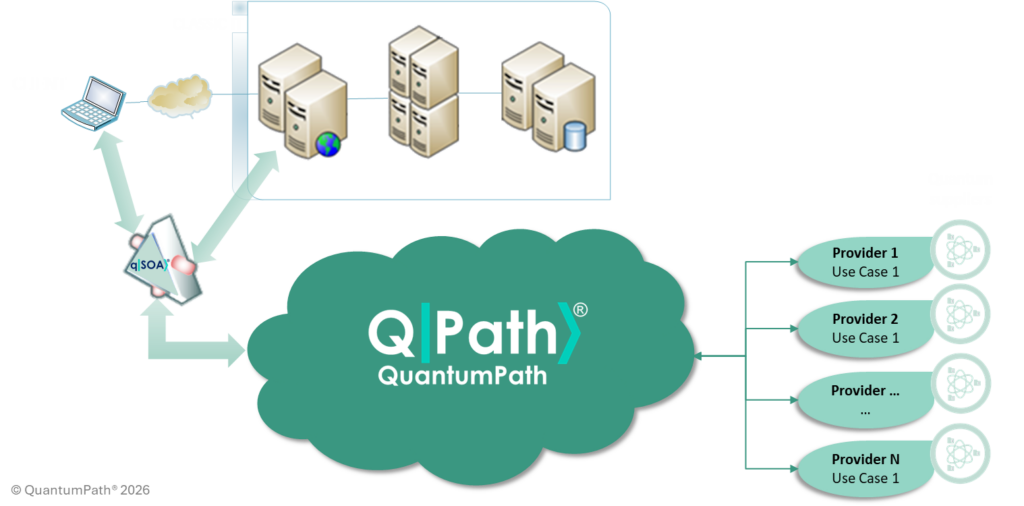
Figure 1: QuantumPath®, software hybridization model.
qSOA® is QuantumPath®’s solution by design for creating hybrid architectures, providing centralised access to quantum services via a communications network and a protocol for accessing the new system’s services. Best practices are applied at every level of access, including those relating to security, traceability and governance.
Using well-known and reliable software system tools and concepts, qSOA® provides a clear, effective, concrete, secure and open, standards-based architecture for connecting classical and quantum systems [6]. Simplifying the integration model speeds up the natural incorporation of quantum technology into classical infrastructure. We extend the software lifecycle by applying the necessary integration processes and proven, well-established Software Engineering concepts to the quantum domain.
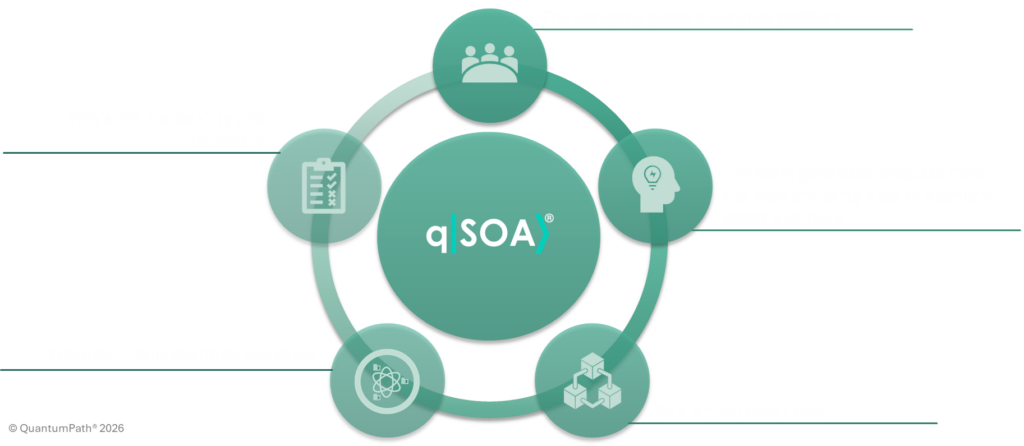
Figure 2: qSOA® workflow
By working with open internet standards such as the REST API and JSON as a message format, qSOA® is positioned at the product service layer. This allows the quantum services platform to be exploited using an extremely specific, high-level API with a well-defined set of functions. This makes the integration process highly specific, customisable and controlled, and provides two interaction contexts [7]:
1) Access quantum use cases developed in the system via the API for exploitation, controlling their lifecycle with a set of graphical tools.
2) Automated access to the asset lifecycle itself, i.e. the ability to dynamically expand the asset catalogue (circuits and dynamic flows), controlling their states, compilations and transpilations fully automatically.
The qSOA® API uses a web services model based on open standards and protocols to facilitate RPC calls to QuantumPath® CORE. To clarify the service model, the API connection points (primitives) have been organised into four functional levels. Each level comprises a group of methods with specific business rule purposes:
· Authentication and connection
· Execution of quantum use cases
· Dynamic asset extension primitives
· Querying historical data for analysis purposes
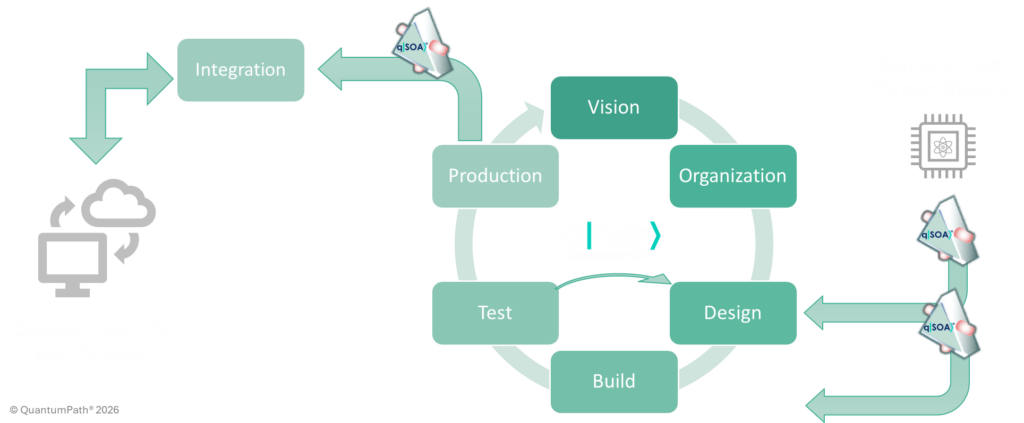
Figure 3: QuantumPath®, software lifecycle with qSOA®
Overall, the qSOA® architecture provides QPath® users with a wide range of advantages for the professional development of hybrid software systems. The most notable of these are:
ü An architecture based on open technology standards, Software Engineering principles, and best practices. This provides development teams with the professional tools needed to competently address the hybridisation of quantum/classical software.
ü Extending the QPath® ALM stack to enable dynamic design and construction (automated by software), as well as the exploitation of use cases.
ü It allows access to the quantum system with any classical technology, such as Python, .NET or Java.
ü It enables the development of clients using any programming language capable of establishing client sockets, communicating via the HTTP protocol and using JSON or XML as message formats.
ü It runs on a reliable, flexible, secure, scalable and high-performance platform that allows classical systems to access quantum products as if they were just another piece of classical software.
ü QPath® metalanguages, APIs and ConnectionPoints simplify the development of quantum algorithms and apps within hybrid information systems.
ü With no more than three lines of code in the classical layer, qSOA® enables the agnostic execution of quantum flows.
ü It facilitates dynamic integration with real-world IT teams by providing software development kits (SDKs) in the most common business programming languages: Python, .NET and Java.
ü Transparent access to quantum technology from the classical system simplifies integration, taking full advantage of accumulated experience in ‘classical’ Software Engineering.
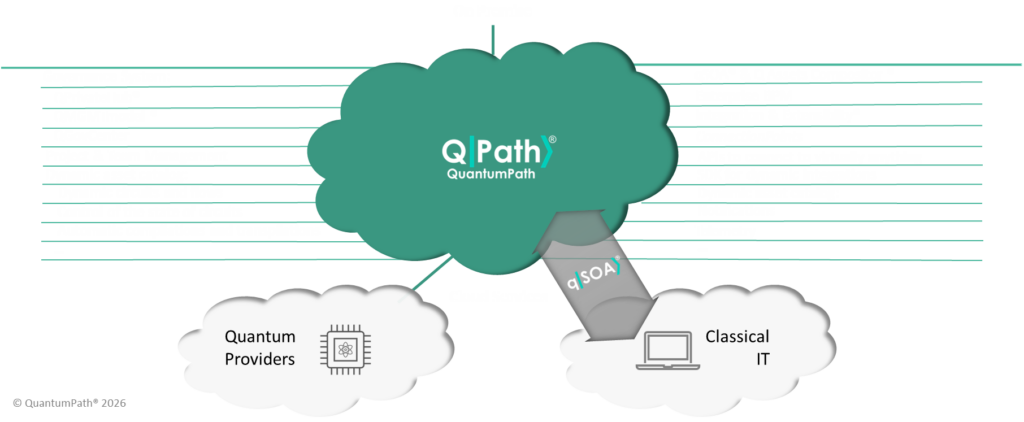
Figure 4: qSOA® in the QuantumPath® ecosystem
qSOA® is designed to work with the patented quantum computing network application development and execution system of QuantumPath® CORE [8]. Therefore, in addition to these direct advantages of qSOA® for software hybridization, we must add those provided by the capabilities of QuantumPath® [9], among which we highlight the following:
· An ecosystem of apps that apply best practices for developing high-quality quantum algorithms and software
· Supports the lifecycle and automation of ALM tasks and phases
· Integrated quantum software development environment (qIDE).
· Development of quantum algorithms and apps in the most appropriate context for each solution. 100% agnostic, semi-agnostic or DirectCode.
· Total software portability: write once, run anywhere
· Supports the quantum technology approach that is needed or desired
· Comprehensive exploration of results using a unified scheme
· Solves most quality issues with quantum computing platforms.
· Governance system for quantum software ecosystems, software solutions and development teams.
· Shorter quantum software development cycles that speed up the delivery of prototypes, proofs of concept (PoCs) and software products to the business.
· Machine learning to support work and decision-making.
· Management and mitigation of technological risks with Risk Management®.
· Supports deployment and use of the platform in multiple contexts, adapting to different corporate strategies.
· Secure, extensible, high-performance and scalable technology.
· Better safeguards investments in the development of quantum algorithms and apps.
· Supports the BizDevOps model by incorporating business (Biz), development (Dev) and operations (Ops) teams into the software development lifecycle.
· Reduces development and integration time for quantum algorithms with classical software by 70–85%. 70% for gates and 85% for annealing.
· Quantum software as a service (QSaaS) platform
· Reduces the learning curve by eliminating the need to master different programming languages and quantum environments.
· RAD platform for creating quantum algorithms and apps that are agnostic with respect to the quantum provider
· Assists users in quantum software development by guiding them step by step through the process of creating algorithms.
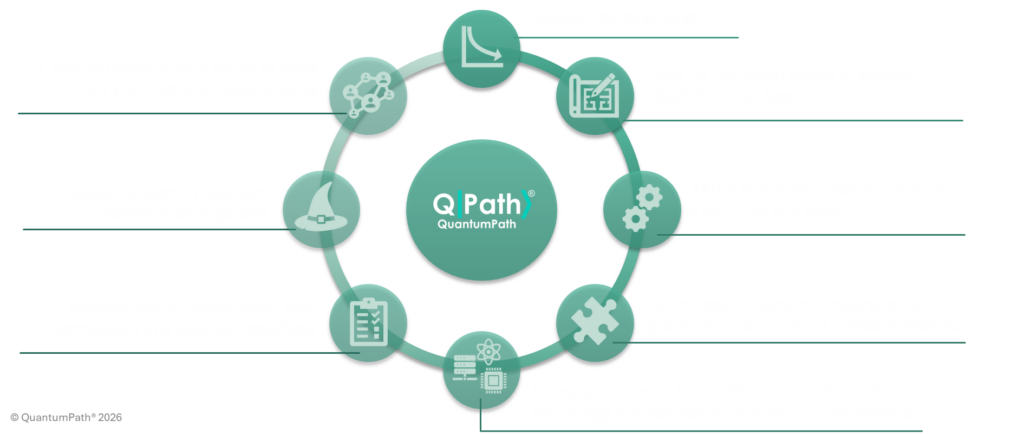
Figure 5: QuantumPath®, an ecosystem of tools that maximize the productivity of development teams
By facilitating the agile development and implementation of the most appropriate solutions for software hybridization, in the context of the rapid evolution of quantum technologies, these advantages of qSOA® and QPath® have a positive impact on the industry’s business by:
· Providing professional tools for the hybridization of software systems that increase productivity
· Supporting the individual or multiple approaches to quantum technology that each developer, company, government, institution, or organization needs or desires: gate model, quantum annealing, and others.
· Allowing the “business” team to define the problem and participate in the project, so that the technical team can then focus on the functional requirements of the solution, develop the hybrid system, and deploy it for use.
· Contribute to significant savings in development and delivery times for quantum/classical software projects
· Improve business competitiveness in the emerging quantum software business
· Minimize the impact of quantum technology evolution on the business
· Support multiple deployment and exploitation contexts to adapt to corporate security and business strategies
· Transparently extend the great benefits that SOA architecture brings to the business to the quantum realm: flexibility, agility in implementing new requirements, containment and reduction of development and integration costs, scalability, integrity, etc.
In the context of the rapid evolution of quantum technologies, these advantages of qSOA® and QPath® facilitate the agile development and implementation of the most appropriate solutions for software hybridisation, positively impacting the industry’s business:
ü Providing professional tools for hybridising software systems to increase productivity;
ü Supporting individual or multiple approaches to quantum technology, as required or desired by developers, companies, governments, institutions or organisations: gate model, quantum annealing and others;
ü Allowing the ‘business’ team to define the problem and participate in the project, enabling the technical team to focus on the functional requirements of the solution, develop the hybrid system and deploy it for use.
ü Contributing to significant savings in development and delivery times for quantum/classical software projects.
ü Improving business competitiveness in the emerging quantum software sector.
ü Minimising the impact of quantum technology evolution on the business.
ü Supporting multiple deployment and exploitation contexts to adapt to corporate security and business strategies.
ü Transparently extend the benefits of SOA architecture to the quantum realm, such as flexibility, agility in implementing new requirements, reduced development and integration costs, scalability and integrity.
Five years after the publication of the article that initiated this one, our expertise in the development and integration of quantum/classical software systems has been further solidified through practical experience. I am more convinced than ever of the original vision that guided the commencement of our R&D in this field: the success of the practical adoption of quantum computing in the current technological context is contingent on professional hybrid software systems.
Architectures such as qSOA® have been providing the industry with professional solutions since 2020, enabling them to invest with confidence in the implementation of useful hybrid systems and access the business advantages that quantum computing can offer for everyday business tasks.
Having used QuantumPath® intensively over the years for projects of various sizes, I have verified that this platform provides all the tools necessary for the successful design, development and implementation of hybrid software systems in an engineering, industrial and controlled manner. It enables the creation of new professional solutions that naturally integrate classic and quantum software, minimising the impact on usability for the given task [10], and provides reliable professional quantum software services that exploit these developments in production.
Finally, it should be noted that QuantumPath®, which combines all its features to make high-quality software solutions, has proven to be highly effective in the development of hybrid software systems ready for industry.
[1] Peterssen, G. QPath, a (very) useful platform for the emerging quantum software business. The QPath Blog. 12/02/2026. https://www.quantumpath.es/2020/12/02/qpath_useful_platform/
[2] Peterssen, G. Piattini, M. Hevia, J.L. Practical Quantum Computing: Challenges of Quantum Software Development. The QPath Blog. 01/31/2022. https://www.quantumpath.es/2022/01/31/practical-quantum-computing-challenges-of-quantum-software-development/
[3] Peterssen, G. Hevia, J.L. Piattini, M. Commercial Quantum Software. The QPath Blog. 04/24/2025. https://www.quantumpath.es/2025/04/24/commercial-quantum-software/
[4] Piattini, M. [et al]. The Talavera Manifesto for Quantum Software Engineering and Programming 2020. https://qsoftwaretech.com/index.php/talavera-manifesto/
[5] Architecting the Future of Software Engineering. A National Agenda for Software Engineering Research & Development. Carnegie Mellon University, Software Engineering Institute, November 2021. https://resources.sei.cmu.edu/library/asset-view.cfm?assetid=741193
[6] Hevia, J.L. Piattin, M. Peterssen, G. qSOA®: technology for dynamic integration of quantum-classical hybrid software systems. The QPath Blog. 11/14/2022. https://www.quantumpath.es/2022/06/04/qsoa-technology-for-dynamic-integration-of-quantum-classical-hybrid-software-systems/
[7] Hevia, J.L. Peterssen, G. Piattini, M. qSOA®: Dynamic integration for hybrid quantum/Classical software systems. Journal of Systems and Software. Volume 214, August 2024.
[8] Peterssen, G. Hevia, J.L. Piattini, M. SYSTEM FOR DEVELOPING AND RUNNING APPLICATIONS IN HYBRID QUANTUM COMPUTING NETWORKS. European Patent No. EP4231204. European Patent Office (EPO). 2025.
[9] QPath® Capabilies. https://www.quantumpath.es/qpath-capabilities/
[10] Peterssen, G. Hevia, J.L. Piattini, M. [et al.]. Quantum Software Engineering & QuantumPath®. Chapter 9, Hybrid Systems. aQuantum. 2023.

