
The QPath Blog

Commercial Quantum Software


Quantum computing has created enormous expectations about the advantages that this technology will bring to the competitiveness and business of companies, but, after some years of strong investment in R&D, the results of the quantum software business are not very relevant so far. This situation is generating concerns among some industry players, and, among the possible causes of these results, some point out the lack of commercial software solutions. In this article we present an overview of the current state of commercial quantum software and the role of Quantum Software Engineering (QSE) in the professional development of commercial quantum software capable of meeting market needs. As a case study, we present the capabilities of QuantumPath® for commercial quantum software development and services.
Keywords: quantum computing; quantum software engineering; commercial quantum software; QuantumPath®.
Introduction
Perhaps as a result of our extensive professional experience in the field of software development, software-related services and software engineering, we have been insisting for years that the development of the quantum industry would not have a successful future on a societal scale if it only depended on the essential scientific/technical advances in the field of quantum hardware. It will also depend on the development and maturity of the indispensable ingredient and natural companion par excellence of computer technologies: software [1].
We believe that, as happened with classical computing in its early days, it will be the polymath teams developing software solutions (physicists, mathematicians, chemists, software engineers, programmers, etc.), in direct interaction with users and the market, who will end up defining how and what quantum computing will be used for by developing the applications that will first make it useful and, progressively, universal [2]. Until a point is reached where the evolution of technologies itself will make interaction with quantum circuits and hardware a low-level exercise (as is the case with assembler and other very specific purpose elements), and quantum software will have operating systems, libraries, service layers, applications, generative AI… an ordinary basis in the development of new products.
In the few years that quantum software development has been in existence, much progress has been made, but so far it has basically been limited to satisfying the needs of laboratories for quantum hardware and, progressively, to the development of proofs of concept and experimental use cases to show the application potential of quantum computing. All this is necessary and enriching, an irreplaceable part of the evolution, but it does not resolve the complexities involved in providing and meeting the needs of the products and services demanded by industry and society: commercial quantum software. With quantum hardware, the experience consolidated in classical hardware has been used to design new technologies, so why not apply the experience in software to advance stages in quantum software to be ready for the moment when the technology really takes off?
As with classical software, in quantum software there is also a conceptual and practical difference between programming and professionally developing commercial software. To create high-quality commercial quantum solutions for industry, tasks must be managed as parts of a lifecycle and controlled to achieve greater rigor in the traceability and integrity of the processes of creation, analysis, design, programming, testing, implementation, deployment, integration with the different IT systems with which it will have to interact, as well as its reuse and evolution. For all this to flow harmoniously, it is necessary to work with the right tools and apply a set of best practices, methods, methodologies, etc.
We know that it will not be easy to take quantum software out of the laboratories and experimental projects, because successfully applying what has been learned in the laboratories to the real world requires a different approach to quantum software development than has been used in recent years, a truly engineering and industrial approach based on new methodologies, methods, tools, etc.
Despite the existing complexities for the development and diffusion of commercial quantum software, in this article we will show that there are reasons and results to be optimistic.
Brief overview of the current state of commercial quantum software development
It is usual to refer to quantum software (as is also the case with classical software) as a concept mostly oriented to quantum hardware, but the reality is that this concept is not monolithic, and that it encompasses different areas or niches in which a wide variety of disciplines specialize: algorithms, system software, application software, complete ecosystems and hybrid systems, as well as appropriate software and systems engineering concepts [3].
A good example of this is the Quantum Software Manifesto (QSM) [4], which in 2017 made an early and very valid urgent call to intensify efforts in quantum software to accompany in harmony the rapid advances in quantum hardware. But, adjusted to the context of the Flagship initiative on Quantum Technologies in Europe, it focused on the aspects of quantum software related to communications, computation, simulation, sensors and metrology.
As it is logical to assume, each of these areas evolves at different rates and often without apparent direct interactions between them, but together they accompany, enrich, project and give value to the use of quantum computing in industry. It serves as an example to highlight that, since the market launch of the first tools for the development of enterprise quantum software in 2017 [5], the conditions have quickly been created that make possible the development of commercial quantum software (in which several of the areas listed above intersect).
Commercial quantum software is a professionally developed software product that, as such, must be extensible, secure and of high quality. This can only be achieved with a lot of basic and applied R&D, generating new methodologies, technologies, techniques, tools, methods and professional services made available to both software development teams and end users. This is the only way to provide the quantum software industry with the guarantees it needs and demands in terms of design, architecture, quality, extensibility, scalability, high performance and security.
Beyond the pitfalls intrinsic to this new technological and programming paradigm, the industrial development of quantum software, capable of creating a true quantum software market, remains very complex because:
· there is no quantum job market because the workforce with the “universal” skills required to develop quantum software hardly exists [6]
· there is a growing variety of technological approaches and types of quantum computers, simulators, and emulators that raise technological uncertainty
· there is a wide range of quantum programming languages and development requirements [7].
· the commercial exploitation of quantum software requires the development of hybrid software systems that enable the dynamic integration of quantum IT with classical IT
· the creation and adoption of methodologies, techniques, practices and principles that make commercial quantum software viable is necessary
To accelerate the development of commercial quantum software, it will be necessary to overcome, with a lot of technological and business creativity, these enormous obstacles, many of which will hardly have an immediate solution due to their high social and cultural content.
Bearing in mind all the above, we are committed to contribute to the advancement of the professional development of fluid commercial software through the design, development and application of solutions based on the best practices of Quantum Software Programming and Quantum Software Engineering.
Quantum software programming
For quantum software to grow at the pace demanded by quantum computing, it needs a robust labor market of programmers. Quantum illiteracy remains a real brake on the growth of the workforce market ready to produce quantum software in general and, in particular, commercial quantum software.
In the article Quantum Software Engineering: Practical Challenges [8], we provide an overview of the current state of quantum software, going into the most relevant details of quantum programming languages, quantum software development tools, and quantum software development and execution platforms.
As we have indicated, there is currently a wide variety of quantum software editors, viewers, simulators, libraries and tools. This variety and dispersion of resources generates learning difficulties that do not contribute positively to the growth of the quantum software labour market.
Most of these development resources are focused on the design and programming of quantum and quantum gate-inspired algorithms. However, there are very few proposals that consider hardware-agnostic quantum programming, and part of the complete software lifecycle: creation, development, testing, integration, implementation, deployment and reuse.
From the perspective of each supplier, the proposal of these resources is wide and solvent. Each of them offers the quantum software development resources needed to ensure the proper use of their quantum computers. They also tend to have extensive repositories of information, code, algorithms, training materials, etc. on the Internet.
From the developers’ perspective, the situation is more complex: quantum computers are evolving at a very fast pace and not all of them are equally efficient in the execution of certain quantum algorithms. In this context, developing with the facilities offered by each proprietary environment implies the risk that the result of the work will only be valid for the ecosystem used and using specific versions of it. If you need or want to run what you have developed in another technological environment, you will have to reprogram the algorithm code (totally or partially) to be able to run it in the new environment in which you need or want to work. Even the same environment can be aggressive: a change in its specifications causes binary compatibility to break down and the whole problem must be refactored to adapt it to the new situation.
Quantum Software Engineering
If the shortage of quantum software programmers is worrisome, the shortage of Quantum Software Engineers, given the higher level of specialization, is even more alarming and the expectations for short-term solutions less hopeful.
We consider that Quantum Software Engineering (QSE) is an indispensable contribution to the success of quantum computing [9], necessary to produce commercial quantum software with sufficient quality and productivity, and this is a determinant axis for the diffusion and practical adoption of quantum computing. Furthermore, we are convinced that quantum computing can bring a new golden age to Software Engineering [10].
Those of us who have experience in the software field are aware of how important it is that in the evolution and growth of quantum software we do not make the same mistakes again as in the evolution of classical software. We are now in the advantageous position of being able to learn from the history of software engineering, something that will be very useful in creating a good conceptual foundation to facilitate the robust growth of quantum software.
Like many, we believe that quantum software must be produced by applying the knowledge and lessons learned in the field of software engineering. This involves applying or adapting existing software engineering processes, methods, techniques, practices, and principles to quantum software development, as well as creating new ones that will shape QSE. To this end, we recommend that those interested in applying Quantum Software Engineering pay attention to two documents that are very useful as a reference and guide for action:
· The Talavera Manifesto on Quantum Software Engineering and Quantum Software Programming [11]
· The National Agenda for Software Engineering Research and Development (a.k.a. SEI Agenda) [12]
Below, we will show the most relevant results of the work we have been doing for years to offer the market alternatives to provide professional services to society with commercial quantum software ready to be used by the industry.
QuantumPath® and commercial quantum software development
When we started our journey in quantum software in 2017, we quickly identified that one of the most relevant obstacles to the rapid growth of this industry is the shortage of skilled workforce. This situation stimulated us, with the goal of significantly reducing the learning curve, to provide the novice developers on our team with tools that will effectively professionally accelerate their ability to actively participate in software development.
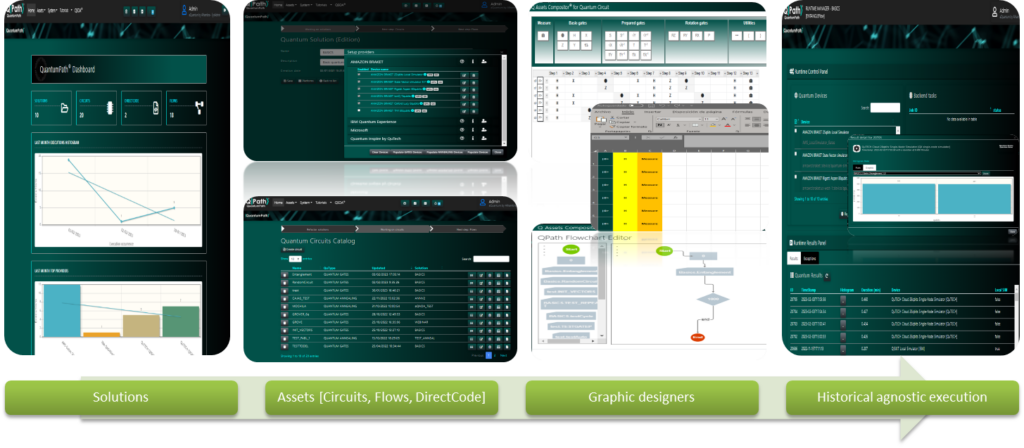
Figure 1: Quantum Software Engineering with QuantumPath®
We first visualized that, with the advent of quantum computers, the need for the development of industry-useful software (or as it is now also known, commercial quantum software), was already there [13]. After the first investigations we included that it was time to start working on the creation of the software solutions that the market would be demanding for the professional development of commercial quantum software. To this end, we focused our R&D on Quantum Software Engineering, professional programming, and its practical applications.
Armed with these convictions, we approached the challenge of designing and creating working tools for professional quantum software development that did not demand a workforce with “universal” quantum competencies. Based on three founding principles (ALM, quantum hardware agnosticism and hybridization), the working environment to be created should provide the necessary tools for our development team to concentrate on the solution to be implemented, without having to worry about the specificities of quantum platforms and their specific requirements.
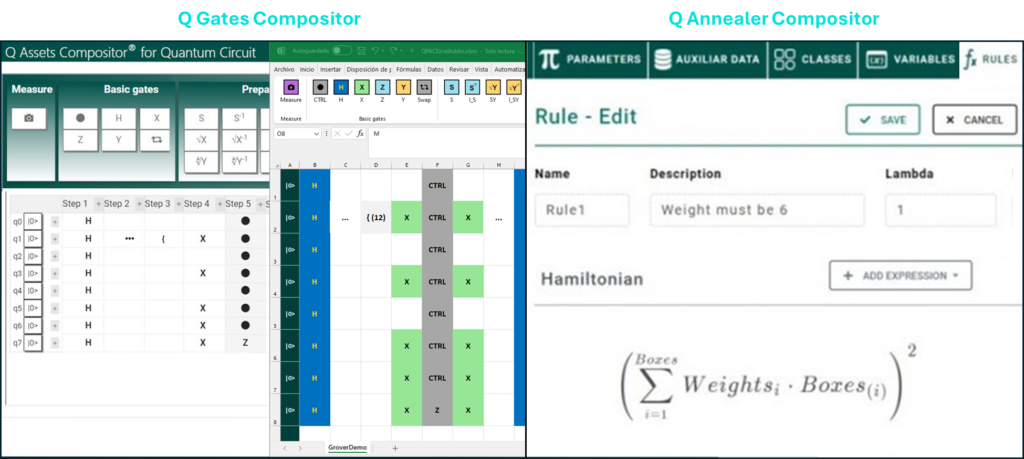
Figure 2: QuantumPath® Visual Editors for Quantum Circuits and Annealing Formulations
The most relevant result of this work is QuantumPath®, a platform created from the Software Engineering approach for the professional development of industry-ready quantum software applications that, over the years, has not only matured, but has been enriched with new functionalities and capabilities that have strengthened its capabilities for the development of commercial quantum software. Furthermore, all of this has been complemented by a quantum software professional services platform, something we consider essential for the continued exploitation of the commercial software developed.
By working with QuantumPath® users not only receive the support to work with the complete software lifecycle (vision, development, testing, integrations and implementation, up to deployment and reuse), they can also apply to their developments, transparently, and other important principles of software engineering, relevant to commercial quantum software development, such as:
· being agnostic with respect to quantum programming languages and technologies
· providing a clear model of components, services, telemetry and functionalities that provide a mature, default architecture for the design of quantum information systems.
· ensure the quality of quantum software
· address security and privacy by design
· address software sustainability by design
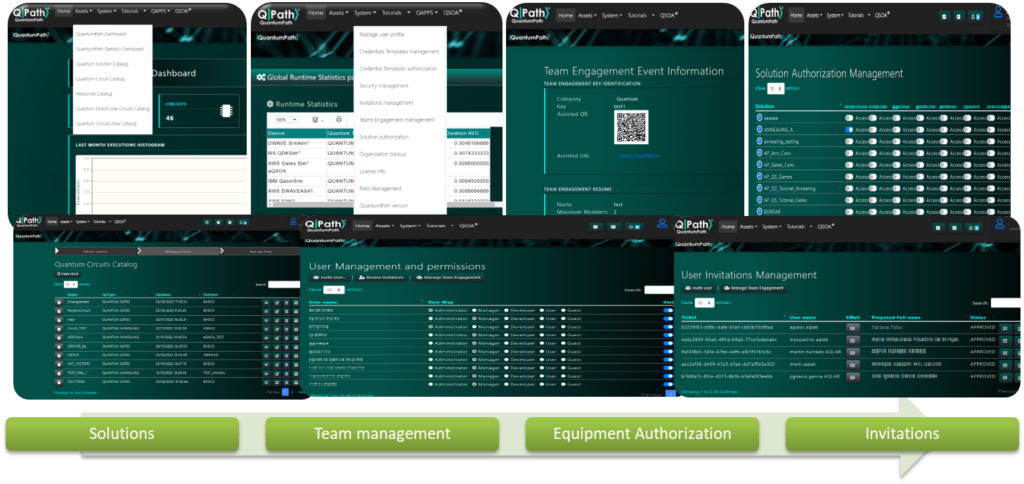
Figure 3: QuantumPath® Team and Solution Management
From the beginning we knew that, with these features, we were ahead of the market demands for this type of quantum software development solutions (in fact, we consider that we are still somewhat ahead of the curve). But, in addition to the enormous satisfaction of pioneering the development of a platform for commercial quantum software programming and services, we were also able to implement the Quantum Software Engineering approach to these areas of quantum software in the platform:
· quantum algorithms, with a set of interfaces and instructions to perform a specific task or solve specific problems
· application software to develop computer programs designed for end users to perform specific tasks
· software ecosystem that serves to interconnect software applications, platforms and services that work together to provide end-to-end solutions for users
· hybrid software system for combining different types of software or approaches to achieve a more effective and versatile result
And all this, as it should be in commercial software, integrated for users to work transparently with good engineering and programming practices, the life cycle of quantum and hybrid software, and the commercial exploitation of both the platform and the developments made with it, thus facilitating users:
· rapid adoption of quantum technology
· a fully extensible platform, which adapts to changes in vendors and their technologies in an agile manner
· a RAD (Rapid Application Development) platform to professionally build vendor-agnostic, hybrid, secure, extensible, scalable and high-performance commercial quantum algorithms and systems
· develop, deploy and run industry-ready commercial software solutions.
While it is true that several quantum algorithm development platforms and tools exist, it is also true that QuantumPath® remains the only platform originally conceived from an applied quantum software engineering perspective and specifically designed to deliver professional quantum software services. Therefore, quantum algorithm development with QuantumPath® is part of the lifecycle of software applications that enable the practical application of quantum advantages to business, not an end in itself. To ensure the continuity of this strategy, we have been working for years with a multi-year roadmap that continuously incorporates new technologies, tools, processes, and solutions that update and expand the set of solutions that apply best practices to the business of quantum software.
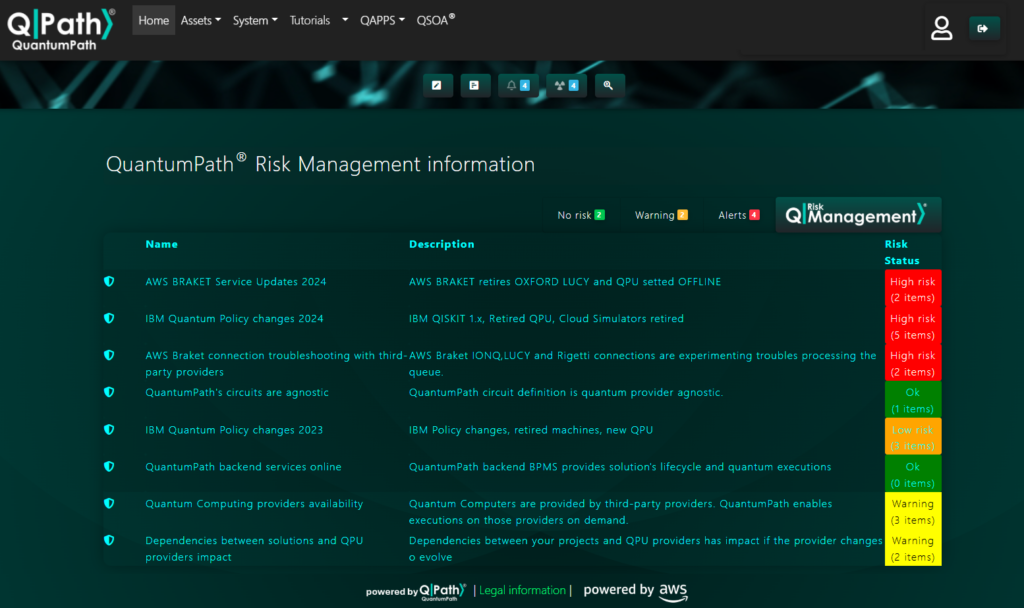
Figure 4: Technology Risk Management with QuantumPath®
Practical application of Quantum Software Engineering
QuantumPath® and the principles of the Talavera Manifesto.
In the design and development of QuantumPath® all the principles of the Talavera Manifesto have been applied and enriched, something that can be easily verified when using the platform:
1) Q|Agnostic, which guarantees the development of quantum algorithms and applications in the most appropriate context for each solution: 100% agnostic, semi-agnostic with DirectCode.
2) Q|Hybrid, which enables the dynamic integration of hybrid (quantum/classical) software systems.
3) Q|ALM, which supports the development and lifecycle of professional quantum algorithms and applications developed with the platform.
4) Q|Software Engineering®, which makes the evolution of quantum software viable, supporting software re-engineering/modernization processes.
5) Q|Business, which guarantees significant savings in the development and delivery times of quantum programs to the business and, if possible, with zero defects, which includes different techniques for quantum software testing.
6) Q|Quality, which by design solves most of the quality problems of quantum computing platforms.
7) The combination of the different platform capabilities and tools included in this list provide different ways of reusing quantum software.
8) Q|Management for software governance and management, for which it offers specific lifecycles for quantum and hybrid software.
QuantumPath® and the SEI Agenda
When the SEI Agenda was published, QuantumPath® had already incorporated practical solutions, which have been refined with use and also enriched with new functionalities, on the most relevant issues raised for Software Engineering Research and Development. Among them we highlight the following:
1) Q|Dashboard, Q|Statistics Dashboard and Q|GovCenter allow to query and analyze, from different perspectives, the telemetry generated in the system and to use machine learning techniques to support these works and the decisions to be taken.
2) The code control inherent to the platform’s CORE, which performs a continuous process of testing and improvement of the subsystems responsible for this action within the system. Users can also test quantum assets with Q|Tester [14], employing specialized techniques such as use cases and mutants of the assets being built. Users can also work with Q|rEngineer [15], the platform’s APP that allows, from a quantum software re-engineering perspective, to adapt with the least possible effort algorithms developed in other environments to the QPath® architecture.
3) The Q|ALM model of the platform automates ALM tasks and phases, assists process management and supports quantum project management. Q|EngineerBoard provides an integrated interface to work with.
4) qSOA® and its open standards-based protocol [16] enable the dynamic integration of quantum software and classical computing with its architecture. Adding APIs such as Q|PySDK [17], which accelerates the use of qSOA® for application development with Python, as well as libraries for other programming languages (such as .NET, Java…etc.) will make possible the rapid adoption of quantum modules in conventional software architectures.

Figure 5: QuantumPath® Engineer Board
In addition to the above, Quantum Software Engineering applied in QuantumPath® also contributes to the development of commercial quantum software:
· An integrated Business Stack platform for professional quantum software composed of:
o A specialized platform for the development of commercial hybrid software and systems [18]
o A specialized platform for commercial quantum software services [19]
· The qIDE of the development platform supports all quantum technology approaches: gate-based models, quantum annealing, simulators, emulators. Users work transparently with the agnosticism of the platform by using the Q|Assets Compositor® design and development tools [20] for both quantum circuits and QUBO formulations (or whatever the future may bring), with the reinforcement of rich client environments such as our Q|xCompositor [21], where even a problem formulated for a given technology can be run on different ones if possible, using services such as Q|Agnostic QAOA® [22], [23], [24] for (running QUBO formulations on both quantum annealers and quantum circuit-based computers).
· The platform also offers the possibility of defining a pseudocode or code asset directly (DirectCode), as well as APIs to consume and extend virtually any functionality
· An architecture designed to adapt to different security, IT infrastructure and business strategies of organizations, supporting multiple deployment and exploitation contexts (cloud, on-premise, hybrid) [25], making it easy to join the quantum software business
· A model capable of addressing the most frequent challenges faced by the hybrid software lifecycle [26]
· A model for software modernization based on existing standards [27]
· Risk management of quantum software development [28] through an agnostic architecture that facilitates risk mitigation and, in this way, safeguards the investments made in the development of quantum software assets
· The Q|BizDevOps model which, being integrated with the lifecycle tools, makes it possible for both deployment and continuous integration to be supported by the platform itself
· A Quantum Software Governance System [29] composed of a service model (QPrivateHub®), a service management model (QMGMTmodelTM) and specialized software for governance (QGovCenter)
· The Q|Workforce model designed to reduce the learning curve of developers and increase their productivity, which assists them in the development of quantum software and does not require them to master different languages and quantum environments [30].
Conclusions
There is a growing awareness of the need to implement practical quantum computing solutions. There is also a growing desire to produce quantum software in an industrial and controlled manner. However, these desires could be frustrated if it is not internalized that in order to produce quantum software with sufficient quality and productivity it is imperative to apply the good practices of Quantum Software Engineering (QSE). This is the linchpin for the rapid diffusion of commercial quantum software.
It is important to understand that the successful adoption of quantum computing by industry, however nascent the technology may still be, will largely depend on the dynamic hybridization of classical and quantum IT. To develop and exploit it successfully, it is necessary to create and use professional software solutions specifically designed to facilitate the integration of these two software worlds. Commercial quantum software will be very important in advancing this adoption because it is an essential building block to enhance the practical use of this technology. Not least of all, these business opportunities are not a thing of the future; they are already manifesting themselves before us.
The relevance of use cases and proof of concepts that are so important in laboratories and experimentation must give way to the fact that, more and more, we work, disseminate and talk about success stories of the practical application of commercial software in business, of major professional solutions that allow companies to begin to take advantage of the existing quantum advantages so that, in this way, they can progressively prepare for what is to come. This transition process will be less time-consuming and painful for companies if principles, tools and services are in place to make these projects more viable.
Given its native functionalities, QuantumPath® is an accelerator for the development of the emerging commercial quantum software business, an enabler for its adoption because, in addition to providing tools to transparently apply the best practices of quantum software engineering, it also provides the ability to create hybrid (quantum/classical) commercial software systems that are truly useful for companies [31]. All this guarantees investment in the software thanks to the continuous adaptation to the evolution of quantum hardware.
As if this were not enough, QuantumPath® also contributes to overcoming workforce constraints by facilitating and accelerating the hands-on preparation of quantum software developers, guiding them to do their work with quality and productivity by abstracting away the deep technical complications.
Software design and development has always been, and will always be, limited by the capabilities and power of the hardware with which it coexists. But the history of commercial software development is characterized by the search for solutions that, in some way, allow to circumvent the technological limitations of each moment. Therefore, the design and development of the commercial quantum software needed today can and should anticipate, as much as possible, the current capabilities of quantum hardware. The engineering and industrial approach of proposals such as those of QuantumPath®, which allow the development and use of industry-ready commercial quantum/classical hybrid quantum software systems, are a good example of this.
[1] Peterssen, G. Hevia, J.L. Piattini, M. Professional development of quantum/classical hybrid software systems: the life cycle. The QPath® Blog, 14/07/2023. https://www.quantumpath.es/2023/07/14/professional-development-ofvquantum-classical-hybrid-software-systems-the-life-cycle/
[2] Peterssen, G. QPath, an accelerator of commercial quantum software development. The QPath® Blog, 26/11/2020. https://www.quantumpath.es/2020/11/26/qpath_accelerator/
[3] Exman, I. Pérez-Castillo, R. Piattini, M. Felderer, M. Quantum Software. Aspects of Theory and System Design. Springer Nature, 2024. https://doi.org/10.1007/978-3-031-64136-7
[4] Quantum Software Manifesto. 2017. https://www.eqsi.org/fileadmin/user_upload/lu_portal/eqsi.org/About/QSM_dd_18_nov.pdf
[5] Piattini, M. Serrano, M. Cruz Lemus, J.A. Pérez del Castillo, R. Informática Cuántica, Pag. 13-14. Amazon, 2022. https://www.amazon.es/Inform%C3%A1tica-Cu%C3%A1ntica-Gerardo-Piattini-Velthuis/dp/B0B5KQKS49/ref=asc_df_B0B5KQKS49?mcid=c76cc03063a334afa8d37cb8df5c92df&tag=googshopes-21&linkCode=df0&hvadid=699734784661&hvpos=&hvnetw=g&hvrand=4352892840618005430&hvpone=&hvptwo=&hvqmt=&hvdev=c&hvdvcmdl=&hvlocint=&hvlocphy=9047045&hvtargid=pla-1714953596585&psc=1&gad_source=1
[6] Peterssen, G. Quantum Technology Impact: The Necessary Workforce for Developing Quantum Software. QANSWER, 2020. https://ceur-ws.org/Vol-2561/paper1.pdf
[7] Hevia, J.L. Peterssen, ÇG. Ebert, C. Piattini, M. Quantum Computing. IEEE Software. 38(5): 7-15, 2021. DOI: https://10.1109/MS.2021.3087755
[8] Piattini, M. Hevia, J.L. Peterssen, G. Quantum Software Engineering: Practical Challenges. International Journal of Software Engineering and
Knowledge Engineering Vol. 34, No. 9. https://doi.org/10.1142/S021819402441002X
[9] Peterssen, G. Hevia, J.L. Piattini, M. Quantum Software Engineering & QuantumPath®. Chapter 2: QuantumPath® and Quantum Software Engineering. Amazon, 2022. https://www.amazon.com/Quantum-Software-Engineering-QuantumPath%C2%AE-Peterssen/dp/B0C1JJVMLS
[10] Piattini, M. Peterssen, G. Pérez-Castillo, R. Quantum Computing: A New Software Engineering Golden Age. ACM SIGSOFT Software Engineering Notes 45(3): 12-14 (2020). https://doi.org/10.1145/3402127.3402131
[11] The Talavera Manifesto for Quantum Software Engineering and Programming. Mario Piattini, Guido Peterssen, Ricardo Pérez-Castillo, José L. Hevia, Manuel A. Serrano, Guillermo Hernández, Ignacio García Rodríguez de Guzmán, Claudio A. Paradela, Macario Polo, Ezequiel Murina, Luis Jiménez, Juan C. Marqueño, Ramsés Gallego, Jordi Tura, Frank Phillipson, Juan M. Murillo, Alfonso Niño, and Moisés Rodríguez. 2020. https://www.aquantum.es/manifesto/
[12] Architecting the Future of Software Engineering. A National Agenda for Software Engineering Research & Development. Carnegie Mellon University, Software Engineering Institute, November 2021. https://resources.sei.cmu.edu/library/asset-view.cfm?assetid=741193
[13 ] Peterssen, G. QPath, a (very) useful platform for the emerging quantum software business. The QPath® Blog, 02/12/2020. https://www.quantumpath.es/2020/12/02/qpath_useful_platform/
[14] Martínez, A. Peterssen, G. QTester APP beta 1: test manager for quantum software Quantum gate circuits. The QPath® Blog, 10/04/2023. https://www.quantumpath.es/2023/04/10/qtester-app-beta-1-test-manager-for-quantum-software/
[15] Martínez, A. Peterssen, G. Hevia, J.L. QrEngineer APP beta 1: quantum software reengineering tool (I). Adapter for quantum programs developed with the third-party SDK. The QPath® Blog, 23/08/2023. https://www.quantumpath.es/2023/08/23/qrengineer-app-beta-1-quantum-software-reengineering-tool-i/
[16] Hevia, J.L. Peterssen, G. Piattini, M. qSOA®: Dynamic Integration for Hybrid Quantum/Classical Software Systems, The Journal of Systems &
Software (2024), DOI: https://doi.org/10.1016/j.jss.2024.112061
[17] Hevia, J.L. Martin-Toledano, A. Developing in QuantumPath® with Python: Selecting the development environment. The QPath® Blog, 08/11/2023. https://www.quantumpath.es/2023/11/08/developing-in-quantumpath-with-python-selecting-the-development-environment/
[18] Hevia, J.L. Peterssen, G. Piattini, M. QuantumPath: A quantum software development platform. Software: Practice and Experience. Nº 6, 23/12/2021. https://doi.org/10.1002/spe.3064
[19] Peterssen, G. Hevia, J.L. Piattini, M. QuantumPath®: The Quantum Software-as-a-Service platform. The QPath® Blog, 29/10/2023. https://www.quantumpath.es/2023/10/29/quantumpath-the-quantum-software-as-a-service-platform/
[20] Hevia, J.L. Piattini, M. Petersen, G. Functionalities and scalability of graphical development of quantum circuits with QuantumPath®. The QPath® Blog, 23/01/2023. https://www.quantumpath.es/2023/01/23/q-asset-compositor-2-0-functionalities-and-scalability-for-developing-industry-ready-quantum-circuits-with-quantumpath/
[21] Hevia, J.L. Piattini, M. Petersen, G. QuantumPath®’s Q Assets Compositor® family is growing: tools for enterprise quantum software
development. The QPath® Blog, 21/07/2023. https://www.quantumpath.es/2023/07/21/quantumpaths-q-assets-compositor-family-is-growing-tools-for-enterprise-quantum-software-development/
[22] Hevia, J.L. Piattini, M. Petersen, G. QuantumPath® Agnostic QAOA: Annealing optimization algorithms on quantum gate computers. The QPath® Blog, 07/11/2022. https://www.quantumpath.es/2022/11/07/quantumpath-agnostic-qaoa-annealing-optimization-algorithms-on-quantum-gate-computers/
[23] Hevia, J.L. Peterssen, G. Murina, E. Martínez, A. Piattini, M. QuantumPath’s Annealer Compositor. Q-SET@QCE 2021: 13-19. https://ceur-ws.org/Vol-3008/short1.pdf
[24] Hevia, J.L. Murina, E. Peterssen, G. Piattini, M. A New Path to Create Solutions for Quantum Annealing Problems. Journal of Quantum Information Science > Vol.11 No.3, September 2021. https://www.scirp.org/journal/paperinformation?paperid=111942
[25] Hevia, J.L. Peterssen, G QuantumPath® for multiple contexts: cloud, on-premise, hybrid. The QPath® Blog, 5/11/2023. https://www.quantumpath.es/2023/11/05/quantumpath-for-multiple-contexts-cloud-on-premise-hybrid/
[26] Peterssen, G. Hevia, J.L. Piattini, M. Professional development of quantum/classical hybrid software systems: the life cycle. The QPath® Blog, 14/07/2023. https://www.quantumpath.es/2023/07/14/professional-development-ofvquantum-classical-hybrid-software-systems-the-life-cycle/
[27] Pérez-Castillo, R. The QPath Modernization approach for the migration of classical-quantum information systems. The QPath® Blog, 05/01/2021. https://www.quantumpath.es/2021/01/05/the-qpath-modernization-approach-for-the-migration-of-classical-quantum-information-systems/
[28] Hevia, J.L. Peterssen, G. Piattini, M. Quantum Software Development RIsks. Quantum Information and Computation, Vol. 24, No.5&6 (2024). https://www.rintonpress.com/xxqic24/qic-24-56/0455-0467.pdf
[29] Peterssen, G. Hevia, J.L. Quantum Software Ecosystem Governance. Amplify Journal. Vol.38, Nº 3, 2025. https://www.cutter.com/article/quantum-software-ecosystem-governance
[30] Piattini, M. Hevia, J.L. Peterssen, G. QuantumPath® accelerates practical preparation of quantum software developers. The QPath® Blog, 21/04/2022. https://www.quantumpath.es/2022/04/21/quantumpath-accelerates-practical-preparation-of-quantum-software-developers/
[31] Peterssen, G. Hevia, J.L. Piattini, M. Quantum Software Engineering & QuantumPath®. Amazon, 2023. https://www.amazon.com/Quantum-Software-Engineering-QuantumPath%C2%AE-Peterssen/dp/B0C1JJVMLS

